

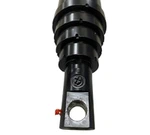


Hydraulic Piston
Jinan Huachen Industrial Co., Ltd. was established in 1998. The company adheres to a diversified business philosophy and follows international trade rules. It is mainly engaged in import and export business and agency business. At present, the pneumatic hydraulic products, large hydraulic machinery, food processing and packaging machinery, auto parts, hardware accessories, etc. are sold to more than 20 countries and regions including the United States, Australia, South America, the Middle East, and South Asia.
Why Choose Us
High quality
Our products has passed 180,000 times of stress tests,we can offer 12 months warranty and 10 years service life.
Rich experience
We have more than 20 years experience,can offer customizable & speical option available.
Customized services
We adopt european technology and american standards to provide customers with a full set of customized services from design to delivery.
Technical support
We currently have a r&d center with 16 technical engineers in r&d teams,there are 20 hydraulic engineers in our company.
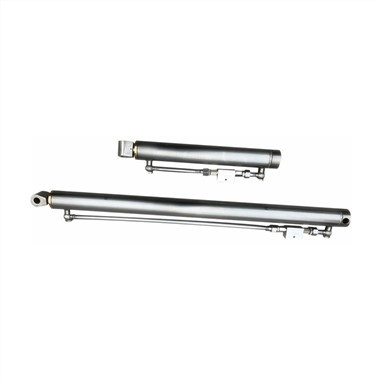


What Is Hydraulic Piston?
A piston is a moving disk enclosed in a cylinder which is made gas-tight by piston rings. The disk moves inside the cylinder as a liquid or gas inside the cylinder expands and contracts. A piston aids in the transformation of heat energy into mechanical work and vice versa. Because of this, pistons are a key component of heat engines.
Benefits of Hydraulic Piston
Strength and durability: It should have the capability to withstand high temperatures and pressures without cracking during the power stroke.
Balanced design: A good piston is one which ensures a proper balance between weight, strength, and performance, keeping into account factors such as crown shape, piston skirt design, and more.
Lightweight: A lightweight piston helps improve engine efficiency and reduces inertia forces.
Low heat expansion: The piston design should ensure the minimum effect of thermal expansion during operation.
Types of Hydraulic Piston
Dished vs flat top pistons
What are flat top pistons? The simple answer is a piston with a flat combustion face or crown. You will find flat top piston with valve relief options and without depending upon the engine application. A flat top piston will usually provide the most even ignition for the best combustion efficiency. With the smallest surface area of all piston types, a flat top piston creates more force and the most even flame distribution, as there are little to no obstructions on the face of the piston. On small combustion chambers, however, the flat top piston can create too much compression. The dished piston, on the other hand, has a lowered piston surface (looking like a pie plate if you will) and provides for a lower compression value with all other engine aspects being the same. Usually used in a boosted application, such as a turbo or blower setup, dished pistons vs flat top pistons are preferred where a high-lift camshaft or a high compression ratio is not required.
Domed piston vs dished piston
In most instances, dished crowns pose the least design issues for several reasons. Because dished pistons are popular with boosted engines, they require less compression than more radical high-lift cams. They usually come as an inverted dome, which is the mirror image of the combustion chamber, or as a symmetrical dish for two- three- or four-valve applications. Piston design methodology dictates soft edges and gradual transitions for the best burns.
A dome creates an obstruction for the flame front. If you need a dome for that extra compression, the lower and broader it is the better. The design becomes more complicated when the dome needs space for a valve pocket, known as a valve relief. With limited real estate, the domed pistons end up with more of a peak, which interferes with the atomized fuel entering the cylinder. In general, builders are moving away from highly domed crowns because of improvements in cylinder head design and fuel injection advances. Now, higher combustion ratios, usually for racing engines, are achieved with flat top pistons vs dome pistons for an overall smaller combustion chamber.
Pistons are critical components in various mechanical systems and are commonly used in a wide range of applications. Some common applications for pistons include:
Internal combustion engines: Piston engines, such as those found in automobiles, motorcycles, and small aircraft, use pistons to convert pressure into mechanical energy by moving up and down within a cylinder.
Air compressors: Piston compressors use pistons to compress air in a cylinder to increase its pressure for various industrial and commercial applications, such as pneumatic tools, HVAC systems, and air-powered machinery.
Hydraulic systems: Pistons are used in hydraulic cylinders to generate linear motion from hydraulic fluid pressure. Hydraulic systems are used in various machinery and equipment, such as construction equipment, industrial machinery, and aircraft landing gear.
Pumps: Piston pumps use reciprocating pistons to move fluid through a system, creating pressure and flow. They are commonly used in applications such as water pumps, oil pumps, and high-pressure hydraulic systems.
Shock absorbers: Some shock absorbers in vehicles and industrial machinery use pistons to dampen vibrations and absorb impact energy, providing smoother and more controlled motion.
Steam engines: Piston steam engines use pistons to convert the pressure of steam into mechanical motion, driving various types of machinery and locomotives in the past.
Refrigeration systems: Piston compressors are commonly used in refrigeration systems to compress refrigerant gas, facilitating the cooling process in refrigerators, air conditioners, and other cooling systems.
Firearms: In firearms, pistons are used in some designs to help cycle the action, eject spent cartridges, and chamber new rounds.
Piston head
The top surface of the piston is known as the piston head. This is where the force of the expanding gases is exerted, causing the piston to move.
Piston rings
Piston rings, slender metal bands that encircle the piston, serve multiple vital purposes within an engine. These include creating a seal within the combustion chamber to prevent gas leakage, replace pistons rings, managing oil consumption, and facilitating the transfer of heat from the piston to the cylinder wall.
Piston skirt
The piston skirt is the elongated, cylindrical portion of the piston that extends below the rings. It helps guide the piston in its up-and-down motion within the cylinder.
Wrist pin
The wrist pin, also known as the piston pin, connects the piston to the connecting rod. This pin allows the piston to pivot as the connecting rod moves, ensuring smooth operation.
Connecting rod
The connecting rod serves as the link between the piston and the crankshaft. As the piston moves up and down, it transfers motion to the crankshaft, which then converts it into rotary motion to drive the vehicle's wheels.
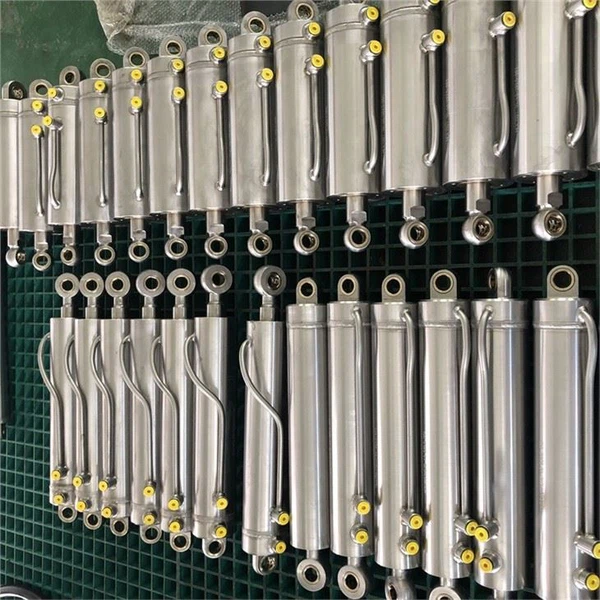
Material of Hydraulic Piston
Aluminum pistons
Aluminum is the most commonly used material in piston manufacturing due to its numerous advantages. It is lightweight, which reduces the overall weight of the engine and improves fuel efficiency. Aluminum also has excellent thermal conductivity, which helps dissipate heat from the combustion chamber.
Moreover, aluminum’s low melting point enables it to withstand high temperatures without losing its shape or properties. This makes it an ideal choice for most passenger vehicles and light-duty applications.
However, aluminum pistons have their limitations. They can expand under high temperatures, leading to potential damage or failure. Therefore, they may not be suitable for high-performance or heavy-duty applications.
Steel pistons
Steel pistons are typically used in heavy-duty and high-performance applications. Compared to aluminum, steel has higher strength and durability, making it more resistant to wear and tear. It can also withstand higher combustion pressures and temperatures without deforming or failing.
Steel pistons are heavier than aluminum ones, which might impact fuel efficiency. However, this additional weight can be beneficial in some applications, as it can help dampen engine vibrations and increase stability.
Forged pistons
Forged pistons are made by compressing a piece of metal under high pressure to achieve the desired shape. This process aligns the metal’s grain structure, resulting in a stronger and more durable piston.
Forged pistons can be made from either aluminum or steel. Forged aluminum pistons combine the lightweight properties of aluminum with the increased strength and durability of forging, making them a popular choice for high-performance applications. On the other hand, forged steel pistons are extremely strong and durable, making them suitable for heavy-duty applications.
Production of the rod
The first part of a piston begins by producing an aluminium rod. There are many benefits of using aluminium while producing the rod. Aluminium is lightweight, rust-proof and easy to cut. Although the rod is long at its inception, a saw cuts it into smaller pieces at different lengths. The small pieces of this rod are called slugs.
Use of the punch press
A punch press is heated when the slug passes through the oven.A slug gets heated at the same temperature as a punch press. After removal of the slug from the oven, place it into the punch. The press uses almost 2000 tons of pressure to turn the slug into the shape of a piston. The piston is kept cool in the air for an hour.
Use of the oven
Once the slugs cool down, they pass through the oven twice. The slug passes through the oven to strengthen the metal. The first time, it passes through at a higher temperature. Then it is passed through a better temperature for stabilisation.
Cutting the excessive metal
The next step involves cutting the basic form of the piston using the lathe. This process is necessary to give the piston a finishing shape. Piston manufacturers create tiny holes on the sides to allow oil to pass. The lathe presses three rings into the top of the piston.
Drilling the wrist pin
Apart from creating three tiny holes, one big hole is required to enter the wrist pin. The big hole is drilled on both sides of the piston. It helps to attach the piston to the rod during piston assembly.
Shaving both sides of the piston
After drilling the wrist pin, a milling machine shaves up a few centimetres from each side of the piston. Shaving occurs when a large hole is drilled to enter the wrist pin. Shaving off metal reduces the piston's weight. A milling machine shaves the metal off the sides of the piston beside the area of three rings to achieve the final form.
The final step
The lathe removes a few more millimetres from the top in the final stage. It helps the piston expand when heat builds up inside. The sharp edges get smooth. Later a machine smoothes the holes through which wrist pins are inserted. It helps the wrist pin fit perfectly.
How to Maintain Hydraulic Piston
Regular oil changes
Regular oil changes ensure that the pistons are always adequately lubricated, reducing friction and preventing scuffing and seizure.
Using quality fuel
Low-quality fuel can lead to carbon buildup on the piston heads, which can cause ring sticking. Using high-quality fuel can help prevent this.
Cooling system maintenance
Keeping your engine cool can prevent cracking due to excessive heat. Regularly check your vehicle’s cooling system to ensure it’s working effectively.
Regular engine check-ups
Regular engine check-ups can help detect potential issues early on, before they lead to piston failure.
Inside every engine you find a cylinder. Within that cylinder are your pistons. The number of pistons you have, as well as their arrangement, is determined by the type of engine you have. The piston’s job in all of this is to transfer force from the exploding gas up to the crankshaft. Each piston inside the cylinder is connected by a rod which allows it to move up and down. Air and fuel are mixed together and pulled into the cylinder. The cylinder compresses the mixture, the spark ignites it, and you have power. The resulting expanding gases from this combustion drive the engine piston forward to move the same way that pushing down on the pedal of a bike causes the wheel to move.
Signs of a Bad Hydraulic Piston
Identifying the signs of a malfunctioning hydraulic piston is crucial to address issues promptly and avoid costly downtime. Some common indicators of a bad hydraulic piston include:
Slow or sluggish movement
If you notice that your hydraulic equipment is operating slower than usual or experiencing delays in movement, it could indicate a problem with the piston. Sluggish movement can result from worn seals, fluid contamination, or internal component damage.
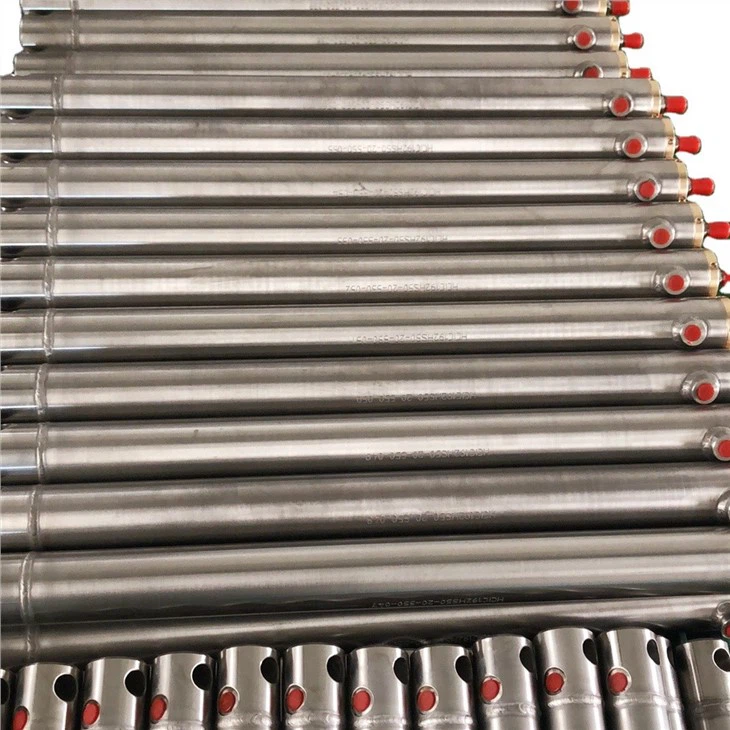
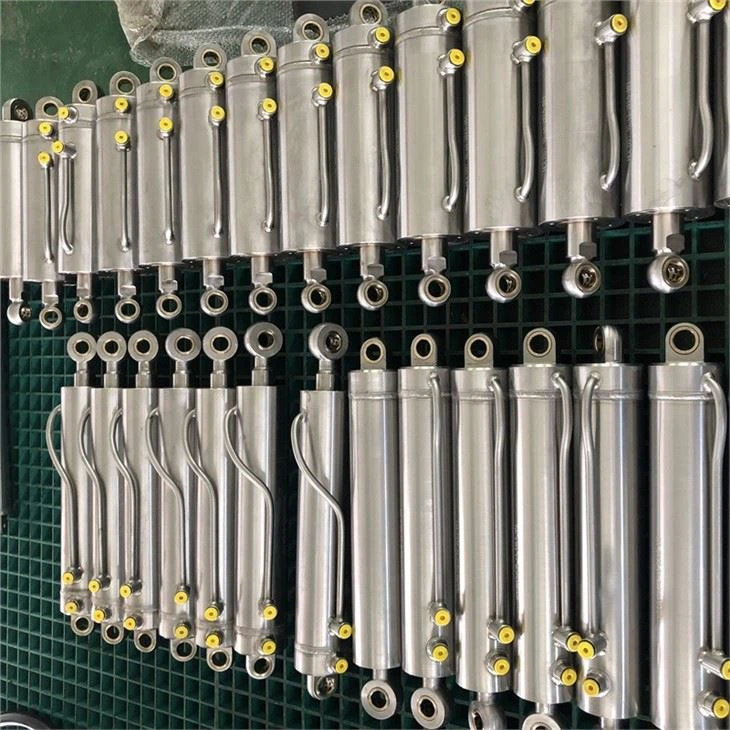
Leaking hydraulic fluid
Leakage is another tell-tale sign of a potential piston problem. Hydraulic pistons rely on a closed system to function properly, and any leakage can disrupt the system’s efficiency. Inspect the equipment for visible fluid leaks, especially around the piston seals.
Noisy operation
Unusual noises during hydraulic equipment operation, such as banging, knocking, or squealing, can be a sign of a faulty piston. These noises may indicate issues like loose or damaged components within the piston assembly.


Inconsistent performance
If your hydraulic equipment exhibits inconsistent or jerky movement, it may be due to a malfunctioning piston. Inconsistent performance can be caused by internal piston wear, damaged seals, or hydraulic fluid contamination.
Design Principles Of A Hydraulic Piston


The following principles are crucial in optimizing piston design for efficient and durable operation within hydraulic mechanisms:
Material selection
Hydraulic pistons are commonly fabricated from high-strength steel, aluminum alloys, or cast iron. They are chosen for their excellent mechanical properties, including high tensile strength, hardness, and corrosion resistance. Steel pistons have exceptional durability and load-bearing capacity, whereas aluminum pistons are favored for their lightweight properties.
Sealing mechanism
The sealing mechanism of a hydraulic piston is paramount for maintaining hydraulic system integrity and efficiency. Piston seals are typically made from elastomeric materials, creating a tight barrier between the piston and cylinder walls. They prevent fluid leakage and contamination ingress while ensuring smooth piston movement within the cylinder.
Surface finish
The surface finish of hydraulic pistons and cylinder walls is meticulously engineered to minimize friction and wear, optimizing system performance. Precision machining methods such as honing and polishing are employed to achieve smooth surface finishes with low roughness values. This reduces frictional losses, enhances sealing effectiveness, and promotes efficient fluid flow within the hydraulic system.
Piston geometry
The geometry of a hydraulic piston including the shape and dimensions of the piston head and rod is carefully designed to optimize performance characteristics. These include load-bearing capacity, speed, and fluid displacement. Piston diameter, rod diameter, and piston stroke length are also considered during the design process to efficiently transmit force and precisely control motion.
Alignment and tolerance
In hydraulic piston design, precise alignment and tolerance control ensure proper functioning and longevity. Meticulous attention is paid to achieving tight dimensional tolerances and maintaining concentricity between the piston and cylinder bore. This minimizes frictional losses, prevents premature wear of sealing components, and ensures consistent performance.
How Do You Measure a Piston Ring Fit?
Piston ring groove side gap
Turn the ring to fit in the piston groove and measure the ring side clearance with feeler gauge set. Refer to manufacturers recomendations as it varies. Rails can be fitted where clearance is excessive but may require turning of the groove in a lathe. To preserve engine balance if you have to do one you should do all the other pistons but this is generally on high mileage engines or ones that have run for a long time with broken rings.
Ring end gap
Push a ring into 6he bore making sure that the two ends do not touch. Do this in an unworn portion of the bore such as above the top ring land before removal or at the bottom of the bore. Use the piston to square up the ring with the bore axis. Measure the end gap using a feeler gauge set. Clearance is generally 0.003″ per inch of bore diameter.
Our Factory
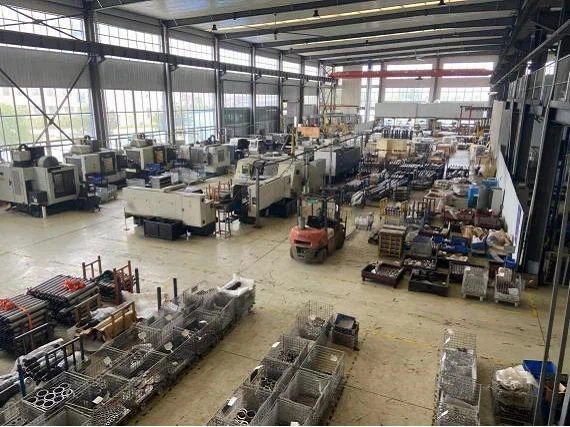
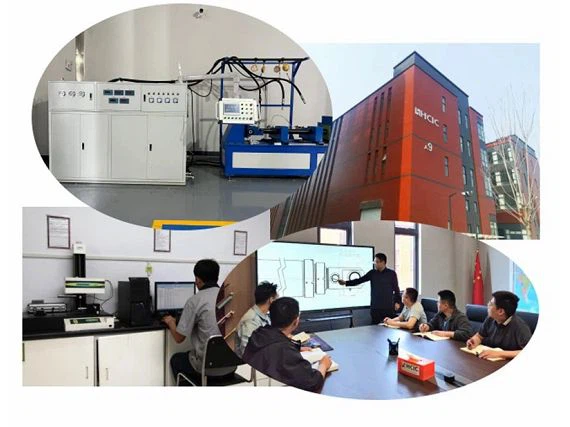
We currently have a R&D center in Jinan with 16 technical engineers in R&D teams. There are 20 hydraulic engineers in our company, more than 600 employees, 3 hydraulic cylinder production workshop, 1 power unit production workshop, and the annual import and export quota exceeds 30 million U.S. dollars.


FAQ
Q: What type of piston should I use?
Q: How do I know what size pistons I need?
Q: What to look for when buying pistons?
Q: What do the numbers on a piston mean?
Q: Does piston shape matter?
The shape of the piston head plays a significant role in combustion efficiency. A flat piston head often results in a faster and more complete burn of the air-fuel mixture, as it helps to prevent the mixture from detonating prematurely.
Q: Does piston direction matter?
Q: What happens if piston ring gap is too big?
Q: Do bigger pistons make more power?
Q: Are shorter pistons better?
Q: How often should pistons be changed?