



Small Hydraulic Cylinder
Your Professional Small Hydraulic Cylinder Manufacturer in China!
Jinan Huachen Industrial Co., Ltd. was established in 1998. The company adheres to the concept of diversified management, follows international trade rules, and is mainly engaged in import and export business and agency business. At present, the pneumatic and hydraulic products, large hydraulic machinery, food processing and packaging machinery, auto parts, hardware accessories, etc. we produce are sold to more than 20 countries and regions including the United States, Australia, South America, the Middle East, and South Asia.
Why Choose Us
Quality Assurance
All products we produce undergo multiple quality inspections to ensure that all products are qualified. All cylinders are chrome-plated, polished, and the individually heat-treated shafts can extend the life of the cylinders.
Rich experience
Our company has 26 years of experience in the industry. We have been deeply involved in this industry and continuously improved our production level and upgraded equipment. We have more than 400 CNC machine tools of various types.
High-quality service
You can consult us at any time for any questions before or after sales, and our professional team will reply you within 2 hours and provide you with professional advice.
Customizable
We offer various designs, colors, styles, patterns and sizes for your products. Customized specifications are also welcome.


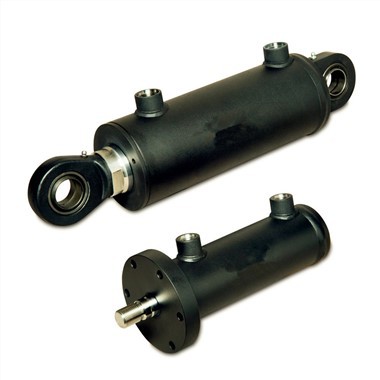


Small hydraulic cylinders are characterized by their small size and short stroke length. Stroke length is the distance that the hydraulic piston reaches in its fully extended state, and in some cylinders such as telescopic hydraulic cylinders, the stroke length of a piston can be much longer than the size of the cylinder. Small hydraulic cylinders, like other cylinders, have the same main parts: the outer cylinder barrel and the hydraulic piston and piston rod which is used to force the piston through the cylinder.
1. Enhanced Power and Force
Small hydraulic cylinders provide superior power and force compared to other mechanical systems. By utilizing hydraulic fluid, these cylinders can generate high amounts of force, making them ideal for heavy-duty applications. The pressurized hydraulic fluid transfers energy to the piston, resulting in exceptional strength and torque.
2. Precise Control and Accuracy
One of the key benefits of using small hydraulic cylinder is their ability to provide precise control and accuracy. Hydraulic systems allow for fine adjustments, ensuring smooth and controlled movements. This level of precision is crucial in applications that require exact positioning, such as assembly lines and robotic operations.
3. Reliable Performance
Small hydraulic cylinders are known for their reliability and durability. These robust devices are designed to withstand harsh conditions and heavy loads, ensuring consistent performance over extended periods. With proper maintenance and care, small hydraulic cylinders can operate efficiently for many years, minimizing downtime and maximizing productivity.
4. Versatility and Adaptability
Another advantage of small hydraulic cylinders is their versatility and adaptability. These cylinders can be customized to meet specific requirements, making them suitable for a wide range of applications across various industries. Whether it's lifting heavy objects, controlling motion, or applying pressure, small hydraulic cylinders can be tailored to suit different needs.
5. Increased Efficiency
Efficiency is a vital aspect of any industrial operation, and small hydraulic cylinders contribute significantly to achieving higher efficiency levels. The hydraulic system's energy transfer mechanism ensures minimal energy loss, resulting in improved overall efficiency. This efficiency translates into cost savings, as less energy is wasted during the operation of small hydraulic cylinders.
6. Compact and Space-Saving Design
Small hydraulic cylinders offer a compact and space-saving design. Their small footprint allows for easy integration into existing machinery and equipment. This advantage is particularly beneficial in industries where space is limited, enabling efficient utilization of available resources.
7. Reduced Maintenance Requirements
Small hydraulic cylinders are designed to require minimal maintenance, reducing downtime and associated costs. With fewer moving parts and robust construction, these cylinders are less prone to wear and tear. Regular inspections and simple maintenance routines are usually sufficient to ensure their optimal performance, making them a cost-effective choice in the long run.
Small Hydraulic Cylinder Agricultural Machines
Window Cleaning Vehicles
In taller buildings with windows and no discernable latch to stand on, windows are cleaned with the help of self-propelled cranes. With multiple small hydraulic cylinders, the crane is able to adjusted at multiple heights, helping the operator to reach places no one else can.
Adjustable Chairs and Workstations
While chairs with adjustable heights have been around for a while, newer versions have remote and button function with an actual small hydraulic cylinder inside the chair to prop it up or take it down. The same is the case for workstations, big tables with multiple things on top of it are lifted and adjusted with the help of small hydraulic cylinders
Transfer Vehicles
The transfer vehicles used to transfer people from ships to turbine use small hydraulic cylinders as stabilizers. Against the current of the water, the cylinders make sure the transfer platform is secure.
Steering Cylinders
Not only in agricultural and lifting machines, small hydraulic cylinders are used as steering cylinders in almost all kinds of vehicles. Power steering was made possible with the help of the hydraulic cylinders. Depending on the drivetrain, the hydraulic cylinder can be small or mid-sized.
Backhoe Diggers
Not every work in a field or farm requires an excavator or large-scale digging machines. A simple attachment of a backhoe on a tractor does the job in an efficient and effective manner. The booms arms of the diggers are propelled with the help of small hydraulic cylinders. So, instead of a large-scale work, a small digger will be efficient in working about the farms.
Trench and Field Diggers
The attachments on agricultural tractors are in most cases aided by small hydraulic cylinders. From a cabin a trench or field digger can be controlled, even machines that sow have hydraulic cylinders to make the use efficient and smooth. Attachments in fields can be opened up with the help of hydraulic cylinders and folded up when the tractor needs to leave the field and drive on the road.
Spreaders and Sprinklers
When planting a large field, using a shovel and sack is not an efficient way of spreading manure. The emphasis being on time and ease of work, spreaders and sprinklers have received wide adoption. Spreading trailers, with the help of a pushing hydraulic cylinder, automatic doors and propelled rotators help uniformly and in a controlled fashion spread manure on the field. The same is the case for sprinklers which are folded up in multiple halves with the help of hydraulic cylinder when not in use sprinkling water or insecticide.
Pickers and Harvesters
Pickers and harvesters also use hydraulic cylinders to propel either people or baskets to harvest and pick fruits and vegetables. Conveyer belts, harvesting nets, raised platforms, small outreach cranes, all are adjusted with small hydraulic cylinders. Depending on the machine, somewhere from 5 to 20 cylinders are used in such equipment.
5 Common Signs Your Small Hydraulic Cylinder Needs Repair and Overhaul
Hydraulic Ram Leak
One of the most common signs that your small hydraulic cylinder needs looking at is a hydraulic ram leak. A hydraulic ram leak happens when the hydraulic fluid inside the cylinder leaks out. This can be caused by a damaged or worn seal or a cracked cylinder wall. A hydraulic ram leak is easy to spot as it usually leaves a visible puddle of fluid around the base of the cylinder. If you notice a hydraulic ram leak, it is important to take immediate action. If you keep on using a cylinder with a hydraulic ram leak, you will end up cursing further damage, which will result in expensive repairs.
Reduced Performance
Another common sign that your small hydraulic cylinder needs repair and overhaul is a reduction in performance. If you notice that your machine is not performing as well as it should, it could be a sign that the small hydraulic cylinder is not working correctly. This could be due to a variety of issues, including worn-out or damaged components, contamination of hydraulic acid, or a problem with the hydraulic pump. Reduced performance can greatly impact how efficiently and productively your machine works, so it is important to have our small hydraulic cylinder inspected as soon as possible.
Strange Noises
Unusual noises from your machine can also indicate that your small hydraulic cylinder needs repairing or overhauling. This could include grinding, knocking, or even screeching noises. These noises indicate that there is an issue with the small hydraulic cylinder or another component of the machine. Ignoring strange noises can lead to further damage and more expensive repairs. If you notice any unusual noises, it is important to have your machine inspected by a hydraulic repair specialist.
Juddering
If you have noticed that your small hydraulic cylinder isn't moving quite as smoothly as it used to be, it could be a sign that something is not right. Juddering is when the cylinder's movements become jerky and uneven as it extends. This problem can be caused by a few factors, such as worn-out seals, poor lubrication, physical damage from increased friction, or even piston bending. If you notice jerking and uneven movements, stop using it and get it looked at before it causes more damage. Regular inspection and maintenance, such as checking the seals, ensuring proper lubrication, and monitoring for signs of physical damage can prevent this from happening.
Overheating
Overheating is another key sign that your small hydraulic cylinder needs attention. It could be due to the contamination of hydraulic fluids, damaged or worn-out components, or a problem with the hydraulic pump. Overheating can cause significant damage to your machine's hydraulic system and other parts. Not only that, but overheating can also pose a safety risk to operators and other personnel. The high temperatures generated by an overheating hydraulic system can cause burns, fires, and even explosions. If you notice your machine is overheating, get it checked out by a hydraulic repair specialist right away. They can also recommend upgrades to improve the system's efficiency, such as upgrading the hydraulic fluid to a higher-quality option that better handles high temperatures.
How to Maintain A Small Hydraulic Cylinder

01.Ensure the Oil Is Clean
02.Perform Regular Inspections
03.Have Spare Small Hydraulic Cylinders Handy
04.Maintain & Replace Accessories Where Necessary
05.Maintain Hydraulic Oil Levels
Our Factory
We currently have a R&D center in Jinan with 16 technical engineers in R&D teams. There are 20 hydraulic engineers in our company, more than 600 employees, 3 hydraulic cylinder production workshop, 1 power unit production workshop.
